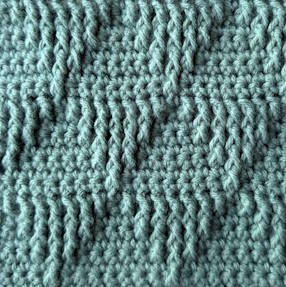
DIAMOND FRAME CROCHET CABLE STITCH – FREE CROCHET STITCH PATTERN
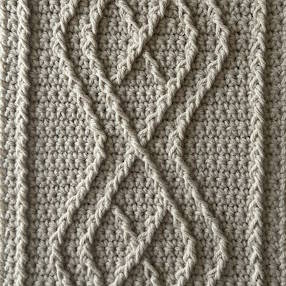
If you love richly textured crochet, the Diamond Frame Crochet Cable Stitch is a pattern worth adding to your collection. This free crochet stitch pattern combines elegant cable lines with a clean geometric design, creating a timeless texture that looks intricate while remaining enjoyable to crochet.
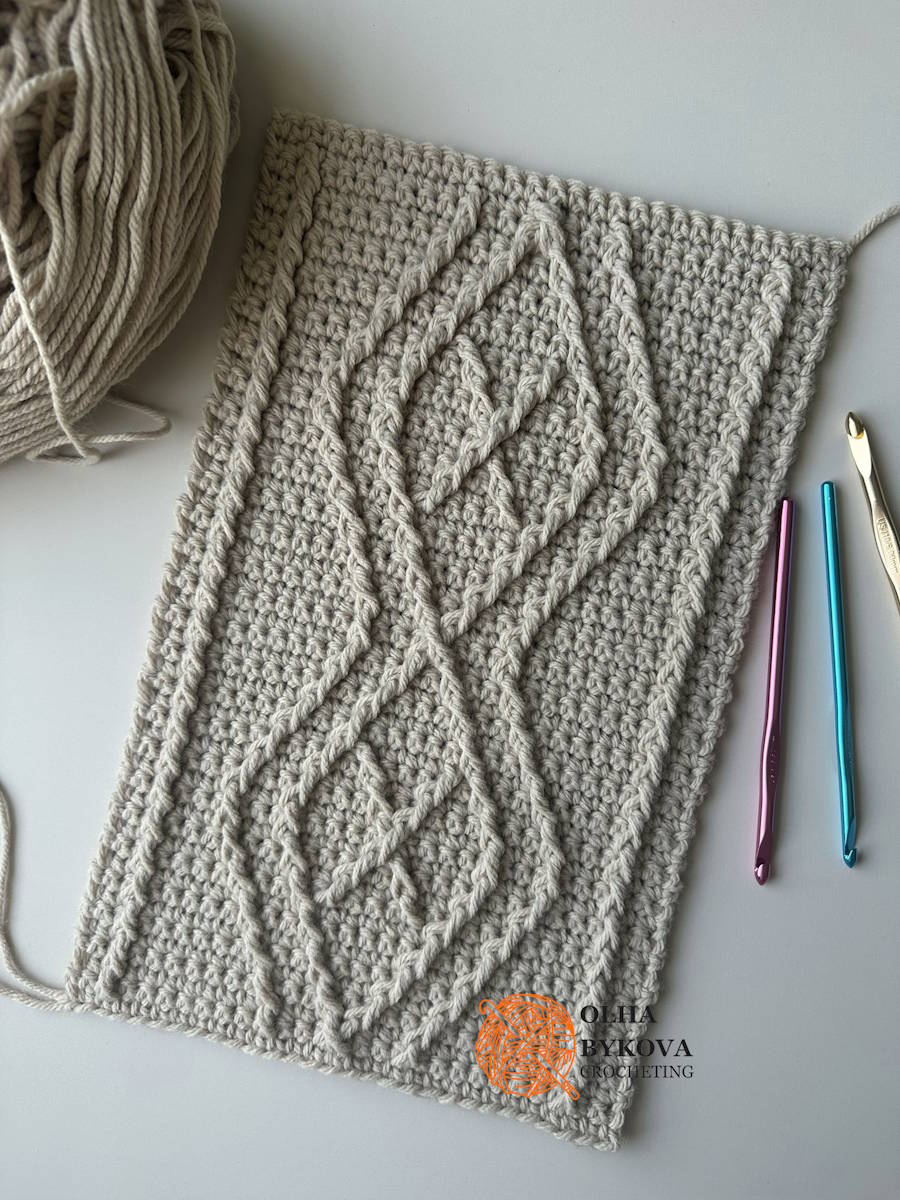
Whether you’re building your personal library of crochet stitch patterns, looking for a new textured crochet stitch, or searching for a classic crochet cable stitch, this pattern offers plenty of inspiration. The written instructions and stitch chart below are completely free, making it easy to learn and incorporate this design into your own projects.
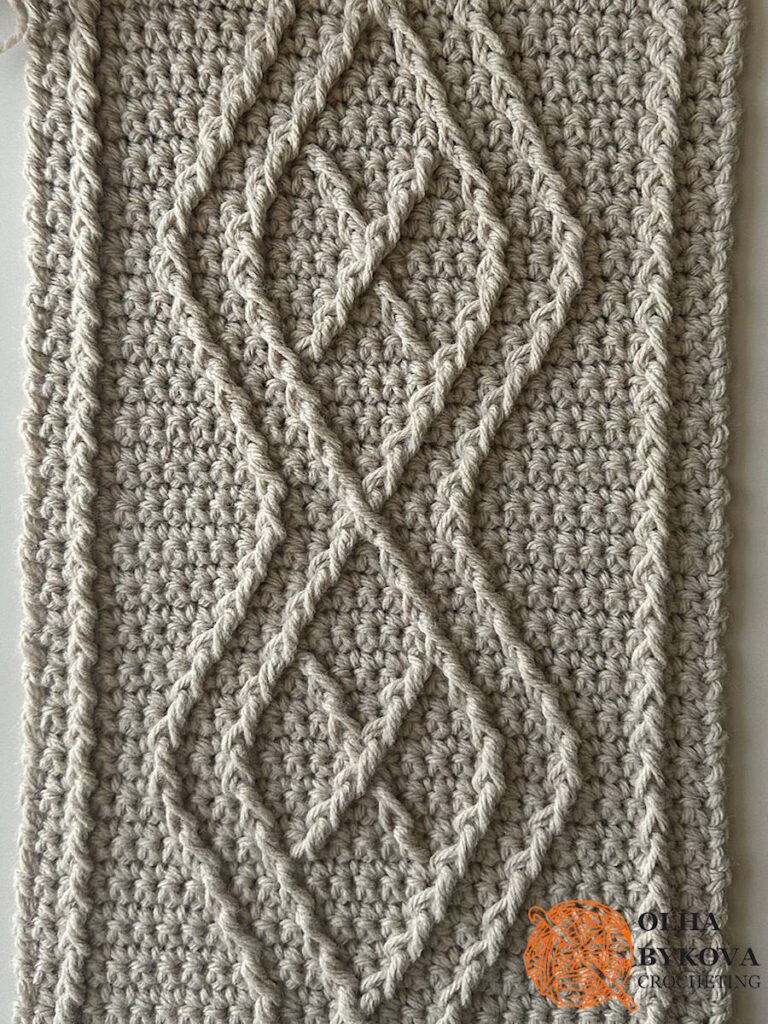
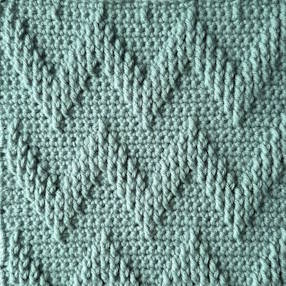
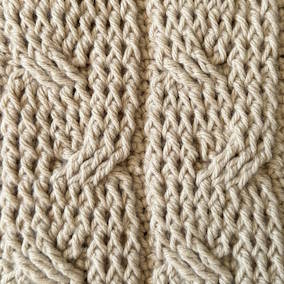
Crochet cable stitches have a unique way of bringing fabric to life. Unlike flat stitch patterns, cables create depth, movement, and beautiful shadows that change as the light hits them. The Diamond Frame design captures that effect with bold vertical cables that meet to form a series of framed diamonds, giving the fabric a refined and architectural look.
Texture & Design
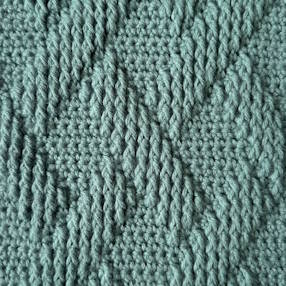
The beauty of the Diamond Frame Crochet Cable Stitch lies in its balance. Strong cable columns create the outer frame, while graceful crossing cables form a flowing diamond motif through the center. The result is a texture that feels structured without becoming heavy or overly busy.
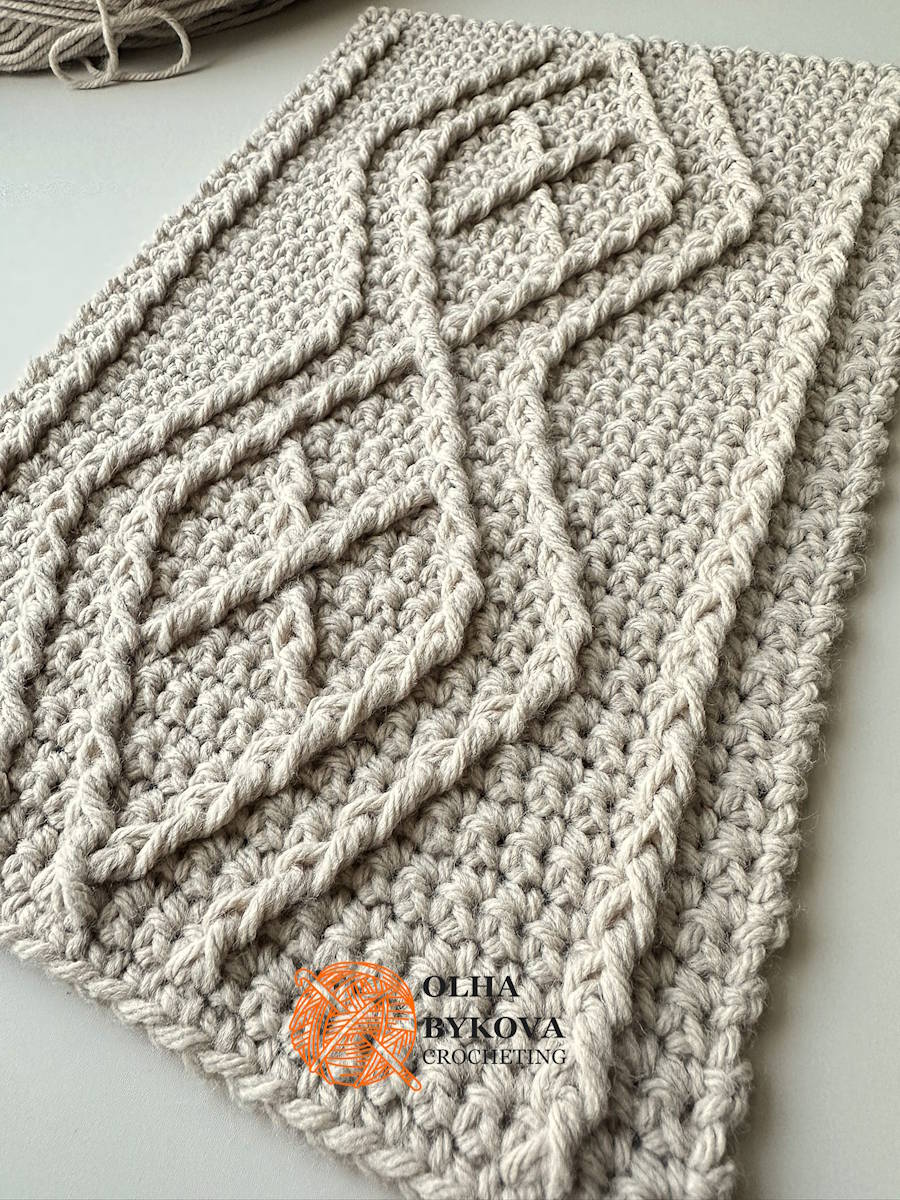
Like many traditional crochet cable stitches, this pattern creates impressive dimension using only front post double crochet stitches worked two rows below. As the cables gradually cross and return to their original positions, they produce natural highlights and shadows that make the fabric appear almost sculpted.
Despite its elegant appearance, the texture remains clean and versatile. It works beautifully in both solid colors and softly heathered yarns, allowing the cables to become the main focal point. The repeating diamond shapes create visual rhythm, making this an excellent crochet textured stitch for projects where you want the stitch pattern itself to tell the story.
Diamond Frame Crochet Cable Stitch Pattern Details
Skill Level: Intermediate
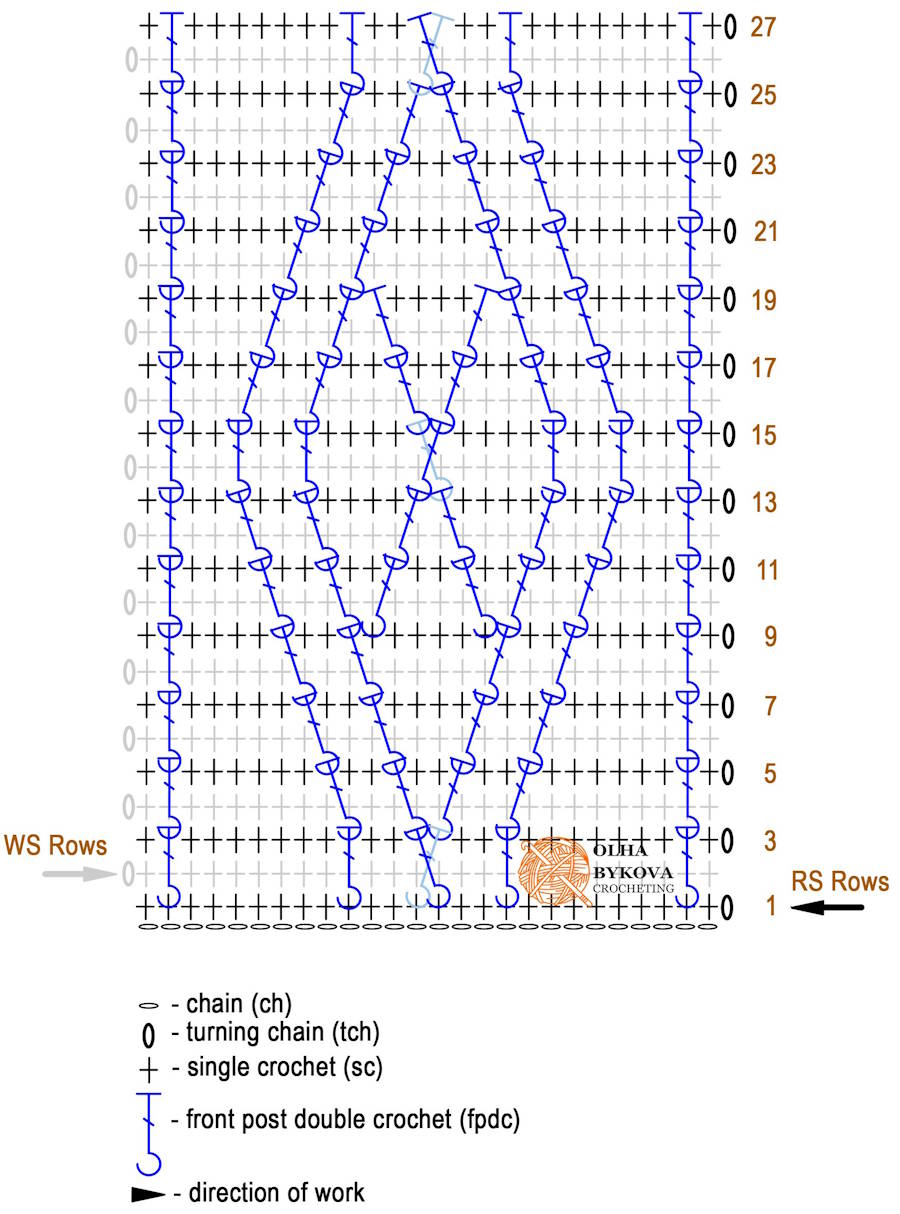
Stitch Pattern Repeat – 24 stitches and 24 rows.
Stitches Used
- chain (ch)
- turning chain (tch)
- single crochet (sc)
- front post double crochet (fpdc)
Terminology: US crochet terms
Important Notes Before You Begin
Instructions are written for turned rows.
All front post stitches are worked around the post of a stitch 2 rows below.
Skip the stitch directly behind each fpdc in the current working row.
Throughout the pattern, “next fpdc” means to work around the next unworked front post double crochet 2 rows below.
Work all front post stitches loosely to prevent your fabric from curling and distorting. This sample uses 2 edge stitches, but you may use any number of edge stitches you prefer.
diamond frame Crochet cable Stitch Pattern –written Instructions
Ch 27
Setup Row 1:
sc in 2nd ch from hook and in each ch across; turn. (26 sts)
Setup Row 2:
Tch 1 (does not count as a stitch here and throughout the pattern), sc in first st and in each st across; turn.
Setup Row 3 (RS):
Tch 1, sc in first st, fpdc around next st 2 rows below, sk 1 st behind fpdc just made, sc in next 7 sts, fpdc around next st 2 rows below, sk 1 st behind fpdc just made, sc in next 2 sts, sk next st, fpdc around next st 2 rows below, working in front of the fpdc just made, fpdc around skipped st 2 rows below, sk 2 sts behind 2 fpdc just made, sc in next 2 sts, fpdc around next st 2 rows below, sk 1 st behind fpdc just made, sc in next 7 sts, fpdc around next st 2 rows below, sk 1 st behind fpdc just made, sc in last st; turn. (6 fpdc, 20 sc)
Row 4 (WS):
Tch 1, sc in first st and in each st across; turn. (26 sc)
From this point on, row-by-row instructions are written for RS rows only. For all WS rows repeat Row 4.
Row 5:
Tch 1, sc in first st, fpdc around next fpdc 2 rows below, sk 1 st behind fpdc just made, sc in next 6 sts, [fpdc around next fpdc 2 rows below, sk 1 st behind fpdc just made, sc in next 2 sts] twice, fpdc around next fpdc 2 rows below, sk 1 st behind fpdc just made,sc in next 2 sts, fpdc around next fpdc 2 rows below, sk 1 st behind fpdc just made,sc in next 6 sts, fpdc around next fpdc 2 rows below, sk 1 st behind fpdc just made, sc in last st; turn. (6 fpdc, 20 sc)
Row 7:
Tch 1, sc in first st, fpdc around next fpdc 2 rows below, sk 1 st behind fpdc just made, sc in next 5 sts, fpdc around next fpdc 2 rows below, sk 1 st behind fpdc just made, sc in next 2 sts, fpdc around next fpdc 2 rows below, sk 1 st behind fpdc just made, sc in next 4 sts, fpdc around next fpdc 2 rows below, sk 1 st behind fpdc just made, sc in next 2 sts, fpdc around next fpdc 2 rows below, sk 1 st behind fpdc just made, sc in next 5 sts, fpdc around next fpdc 2 rows below, sk 1 st behind fpdc just made, sc in last st; turn. (6 fpdc, 20 sc)
Row 9:
Tch 1, sc in first st, fpdc around next fpdc 2 rows below, sk 1 st behind fpdc just made, sc in next 4 sts, fpdc around next fpdc 2 rows below, sk 1 st behind fpdc just made, sc in next 2 sts, fpdc around next fpdc 2 rows below, sk 1 st behind fpdc just made, sc in next 6 sts, fpdc around next fpdc 2 rows below, sk 1 st behind fpdc just made, sc in next 2 sts, fpdc around next fpdc 2 rows below, sk 1 st behind fpdc just made, sc in next 4 sts, fpdc around next fpdc 2 rows below, sk 1 st behind fpdc just made, sc in last st; turn. (6 fpdc, 20 sc)
Row 11:
Tch 1, sc in first st, fpdc around next fpdc 2 rows below, sk 1 st behind fpdc just made, sc in next 3 sts, [fpdc around next fpdc 2 rows below, sk 1 st behind fpdc just made, sc in next 2 sts] twice, fpdc around next sc after the last fpdc worked 2 rows below, sk 1 st behind fpdc just made, sc in next 2 sts, fpdc around sc before the next fpdc 2 rows below, sk 1 st behind fpdc just made, sc in next 2 sts, fpdc around next fpdc 2 rows below, sk 1 st behind fpdc just made, sc in next 2 sts, fpdc around next fpdc 2 rows below, sk 1 st behind fpdc just made,
sc in next 3 sts, fpdc around next fpdc 2 rows below, sk 1 st behind fpdc just made,sc in last st; turn. (8 fpdc, 18 sc)
Row 13:
Tch 1, sc in first st, [fpdc around next fpdc 2 rows below, sk 1 st behind fpdc just made, sc in next 2 sts] twice, fpdc around next fpdc 2 rows below, sk 1 st behind fpdc just made, sc in next 4 sts, fpdc around next 2 fpdc 2 rows below, sk 2 sts behind 2 fpdc just made, sc in next 4 sts, [fpdc around next fpdc 2 rows below, sk 1 st behind fpdc just made,sc in next 2 sts] twice, fpdc around next fpdc 2 rows below, sk 1 st behind fpdc just made, sc in last st; turn. (8 fpdc, 18 sc)
Row 15:
Tch 1, sc in first st, [fpdc around next fpdc 2 rows below, sk 1 st behind fpdc just made, sc in next 2 sts] twice, fpdc around next fpdc 2 rows below, sk 1 st behind fpdc just made, sc in next 4 sts, sk next fpdc, fpdc around next fpdc 2 rows below, working behind the fpdc just made, fpdc around skipped fpdc 2 rows below, sk 2 sts behind 2 fpdc just made, sc in next 4 sts, [fpdc around next fpdc 2 rows below, sk 1 st behind fpdc just made, sc in next 2 sts] twice, fpdc around next fpdc 2 rows below, sk 1 st behind fpdc just made, sc in last st; turn. (8 fpdc, 18 sc)
Row 17:
Tch 1, sc in first st, fpdc around next fpdc 2 rows below, sk 1 st behind fpdc just made, sc in next 3 sts, [fpdc around next fpdc 2 rows below, sk 1 st behind fpdc just made, sc in next 2 sts] twice, fpdc around next fpdc 2 rows below, sk 1 st behind fpdc just made, sc in next 2 sts, [fpdc around next fpdc 2 rows below, sk 1 st behind fpdc just made, sc in next 2 sts] twice, fpdc around next fpdc 2 rows below, sk 1 st behind fpdc just made, sc in next 3 sts, fpdc around next fpdc 2 rows below, sk 1 st behind fpdc just made, sc in last st; turn. (8 fpdc, 18 sc)
Row 19:
Tch 1, sc in first st, fpdc around next fpdc 2 rows below, sk 1 st behind fpdc just made, sc in next 4 sts, fpdc around next fpdc 2 rows below, sk 1 st behind fpdc just made, sc in next 2 sts, fpdc around next 2 fpdc 2 rows below, sk 2 sts behind 2 fpdc just made, sc in next 4 sts, fpdc around next 2 fpdc 2 rows below, sk 2 sts behind 2 fpdc just made, sc in next 2 sts, fpdc around next fpdc 2 rows below, sk 1 st behind fpdc just made, sc in next 4 sts, fpdc around next fpdc 2 rows below, sk 1 st behind fpdc just made, sc in last st; turn. (8 fpdc, 18 sc)
Row 21:
Tch 1, sc in first st, fpdc around next fpdc 2 rows below, sk 1 st behind fpdc just made, sc in next 5 sts, fpdc around next fpdc 2 rows below, sk 1 st behind fpdc just made, sc in next 2 sts, fpdc around next fpdc 2 rows below, sk 1 st behind fpdc just made, sc in next 4 sts, sk next 2 fpdc 2 rows below, fpdc around next fpdc 2 rows below, sk 1 st behind fpdc just made, sc in next 2 sts, fpdc around next fpdc 2 rows below, sk 1 st behind fpdc just made, sc in next 5 sts, fpdc around next fpdc 2 rows below, sk 1 st behind fpdc just made, sc in last st; turn. (6 fpdc, 20 sc)
Row 23:
Tch 1, sc in first st, fpdc around next fpdc 2 rows below, sk 1 st behind fpdc just made, sc in next 6 sts, [fpdc around next fpdc 2 rows below, sk 1 st behind fpdc just made, sc in next 2 sts] twice, fpdc around next fpdc 2 rows below, sk 1 st behind fpdc just made, sc in next 2 sts, fpdc around next fpdc 2 rows below, sk 1 st behind fpdc just made, sc in next 6 sts, fpdc around next fpdc 2 rows below, sk 1 st behind fpdc just made, sc in last st; turn. (6 fpdc, 20 sc)
Row 25:
Tch 1, sc in first st, fpdc around next fpdc 2 rows below, sk 1 st behind fpdc just made, sc in next 7 sts, fpdc around next fpdc 2 rows below, sk 1 st behind fpdc just made, sc in next 2 sts, fpdc around next 2 fpdc 2 rows below, sk 2 sts behind 2 fpdc just made, sc in next 2 sts, fpdc around next fpdc 2 rows below, sk 1 st behind fpdc just made, sc in next 7 sts, fpdc around next fpdc 2 rows below, sk 1 st behind fpdc just made, sc in last st; turn. (6 fpdc, 20 sc)
Row 27:
Tch 1, sc in first st, fpdc around next fpdc 2 rows below, sk 1 st behind fpdc just made, sc in next 7 sts, fpdc around next fpdc 2 rows below, sk 1 st behind fpdc just made, sc in next 2 sts, sk next fpdc, fpdc around next fpdc 2 rows below, working in front of the fpdc just made, fpdc around skipped fpdc 2 rows below, sk 2 sts behind 2 fpdc just made, sc in next 2 sts, fpdc around next fpdc 2 rows below, sk 1 st behind fpdc just made, sc in next 7 sts, fpdc around next fpdc 2 rows below, sk 1 st behind fpdc just made, sc in last st; turn. (6 fpdc, 20 sc)
Repeat Rows 4 – 27 until your fabric reaches desired length.
Free Crochet Cable Diamond Frame Stitch Diagram
Project Ideas
Diamond Frame Crochet Cable Stitch Pattern looks beautiful in cozy blankets, warm sweaters, stylish vests, elegant scarves, comfortable cowls. The structured texture also works exceptionally well for pillow covers, cushion panels, bags, home décor, and other projects where rich surface detail makes a difference.
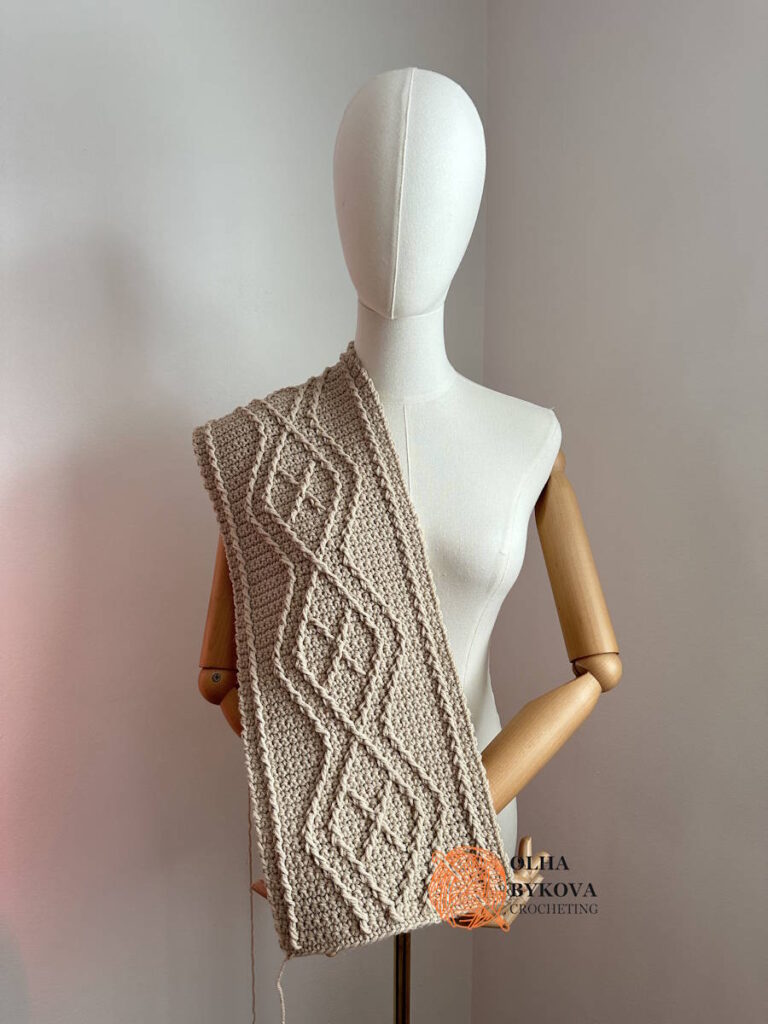
Because the cables create a fabric with excellent body and definition, this stitch is especially suitable for heirloom blankets, textured garments, and sophisticated accessories that never go out of style. Whether you’re designing a modern throw, a classic cardigan, or decorative home accents, the Diamond Frame Crochet Cable Stitch adds depth, elegance, and the timeless charm that only crochet cables can create.
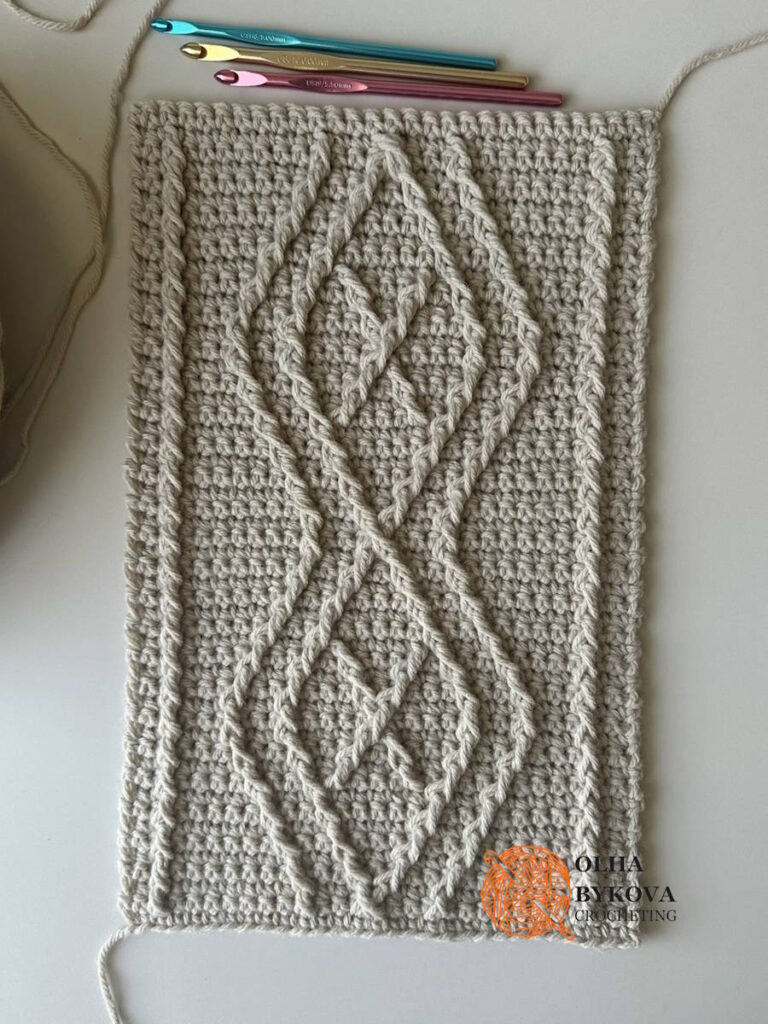
One of the greatest strengths of the Diamond Frame Crochet Cable Stitch is its versatility. This stitch pattern adapts easily to both everyday accessories and larger statement pieces, making it a valuable addition to any crochet stitch library.
Usage & Copyright
This crochet stitch pattern and chart are provided for personal use only.
You may use this stitch to create finished items for personal use or for sale.
Please do not copy, redistribute, sell, or publish this chart in any form, including translations or modified versions, without permission.
If you use this stitch in your projects, I would love to see your work!
Feel free to share your finished items on social media and tag @OlhaBykovaCrocheting, or share your projects through messages on my page Olha Bykova Crocheting to inspire others.
Wishing you many happy stitches and lots of joyful crocheting!
If you enjoyed this stitch, you may like these crochet patterns built around texture and clean geometry.